Collections
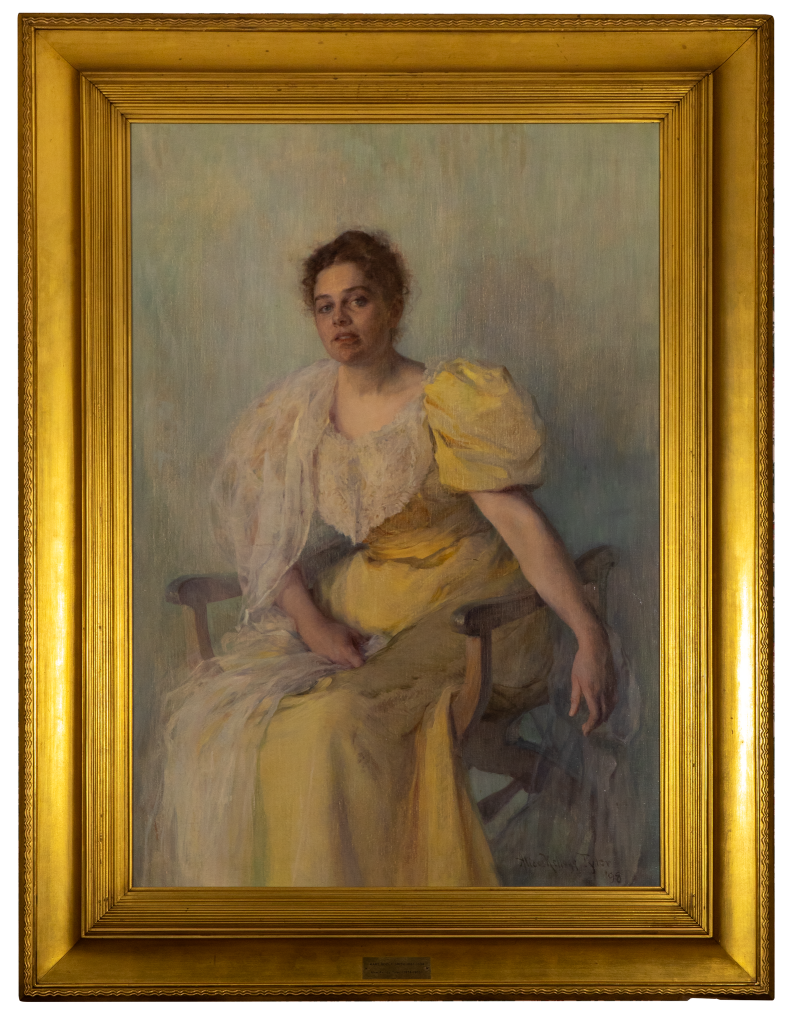
Mary Rozet Smith, 1898
Alice Kellogg Tyler (1862–1900)
Details
Title
Mary Rozet Smith
Date
1898
Artist Name
Alice Kellogg Tyler
Artist’s Life Dates
1862–1900
Item Title
Painting
Materials
Oil on canvas
Accession Number
1966.0112.0005
Credit Line
Hull-House Collection
Not on view
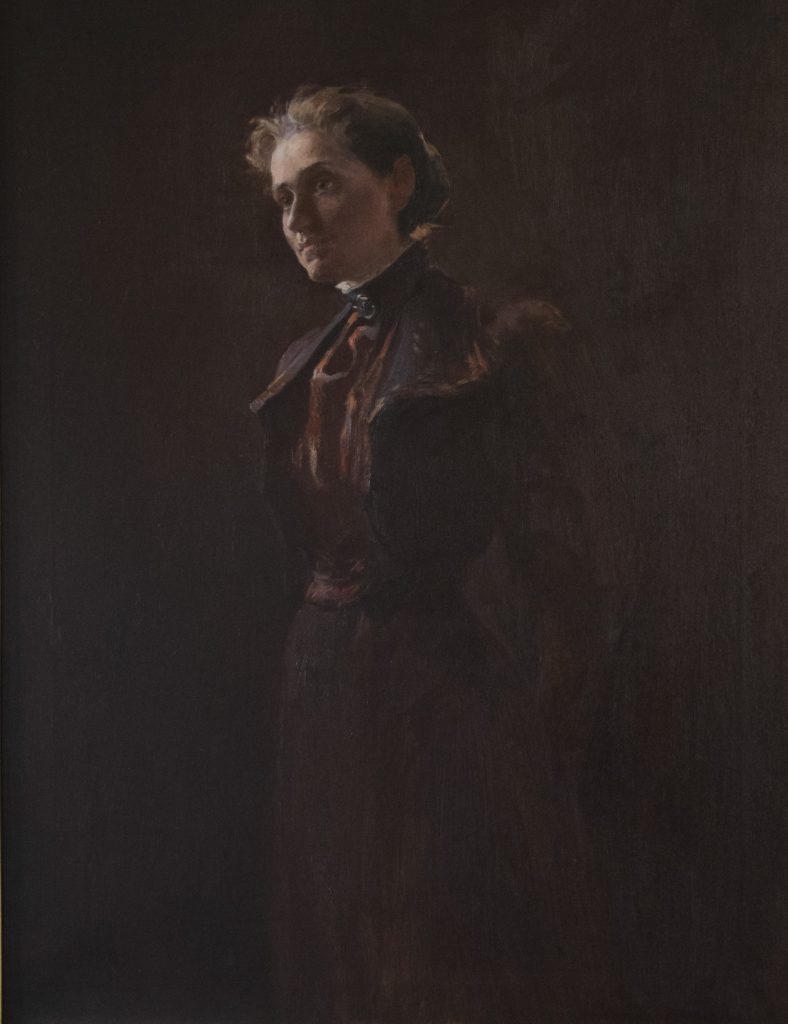
This stunning portrait depicts Mary Rozet Smith (1868-1934) seated in a gauzy yellow evening dress, her body tilted slightly forward, her intense gaze directed at the viewer. Smith was Jane Addams’ life partner and one of Hull-House’s strongest financial supporters. Alice Kellogg Tyler, the artist most closely associated with Hull-House’s early years, rendered Smith’s beauty with moody realism. The play of light accentuates Smith’s exposed skin; her hair is pulled back but slightly mussed. Smith’s left hand, draped over the arm of a neoclassical chair, recalls Michelangelo’s hand of Adam, touched by God.
Jane Addams and Mary Rozet Smith fell in love at Hull-House soon after Addams and Ellen Gates Starr founded the settlement. Smith was Starr’s former student. Addams and Smith’s intimate relationship developed into an enduring partnership that lasted over forty years. Smith never lived permanently at Hull-House, but the two women traveled together abroad, slept in the same bed, purchased a vacation home in Bar Harbor, Maine, and considered adopting a child from the neighborhood. They wrote a lifetime of letters and poems to one another, many of which were burned at Addams’ request upon her death.
The unique domestic environment of Hull-House allowed both men and women to break from a number of social norms, including heteronormative marriage. The relationship between Addams and Smith was not entirely unusual at the time, given the fact that fewer than half of college-educated women of their generation married. But it was unique in its duration, and as a model for future generations. The two women invented their own “healing domesticity,” in Addams’ words. “I love you,” she wrote to Smith, and to no one else. “I am yours ‘til death,” Addams expressed in a letter; and indeed, they died within thirteen months of one another.
Now icons for the LGTBQ movement, Addams and Starr trailblazer a partnership that stands as one of the many political legacies of Hull-House.