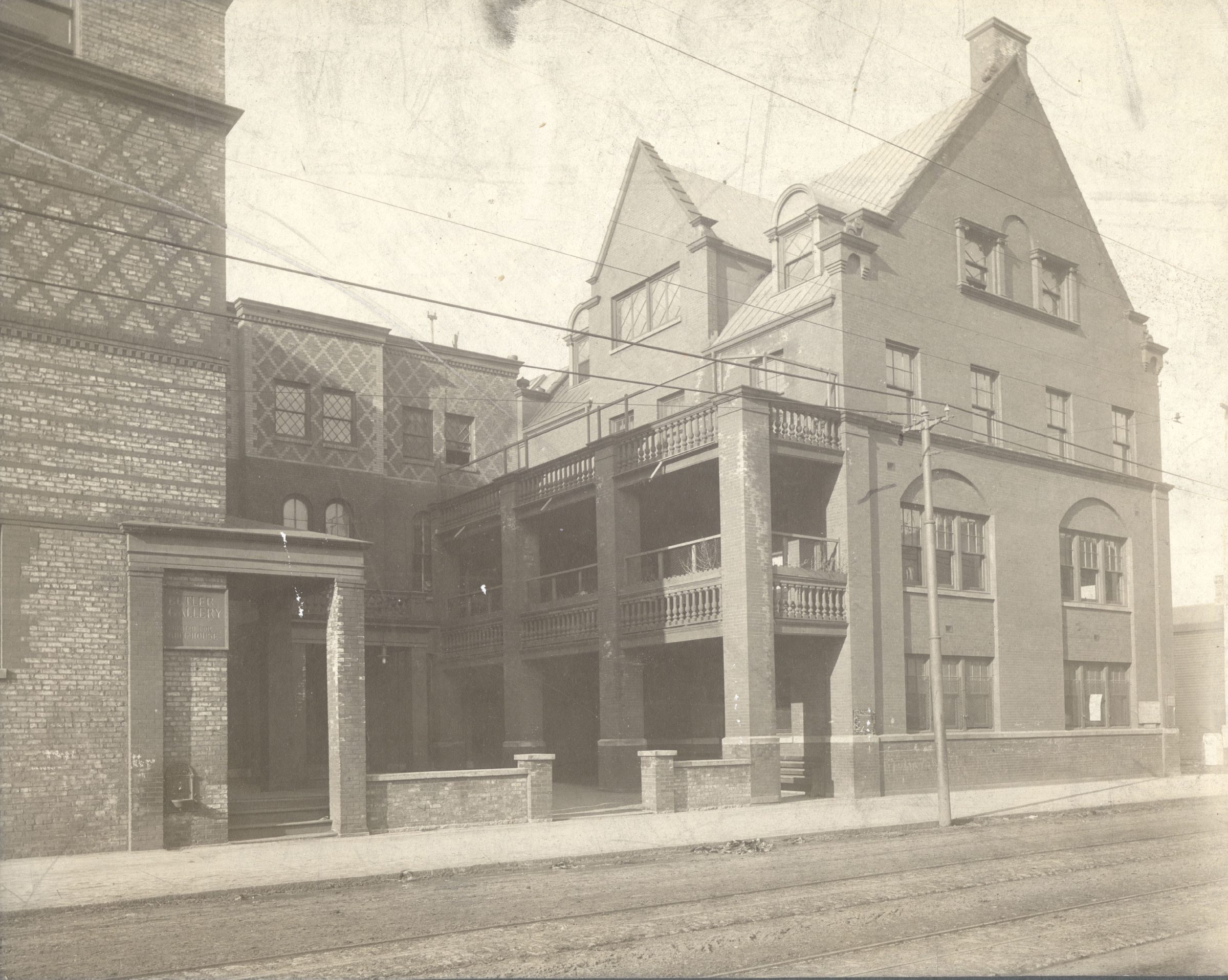
As part of the museum’s annual Halloween festivities, Nadia Maragha takes us through some of the haunted histories of the social settlement. These stories and more are highlighted in our “The Haunting of Hull-House” Halloween Folklore Tours, which run evenings throughout October.
The Hull residence, built in 1856, is often considered one of Chicago’s most haunted sites. As the central building of the Hull-House settlement, the home became synonymous with aid, recreation, and providing cultural experiences to the surrounding neighborhood. So why do stories of ghosts, devils, and other paranormal forces at Hull-House persist?
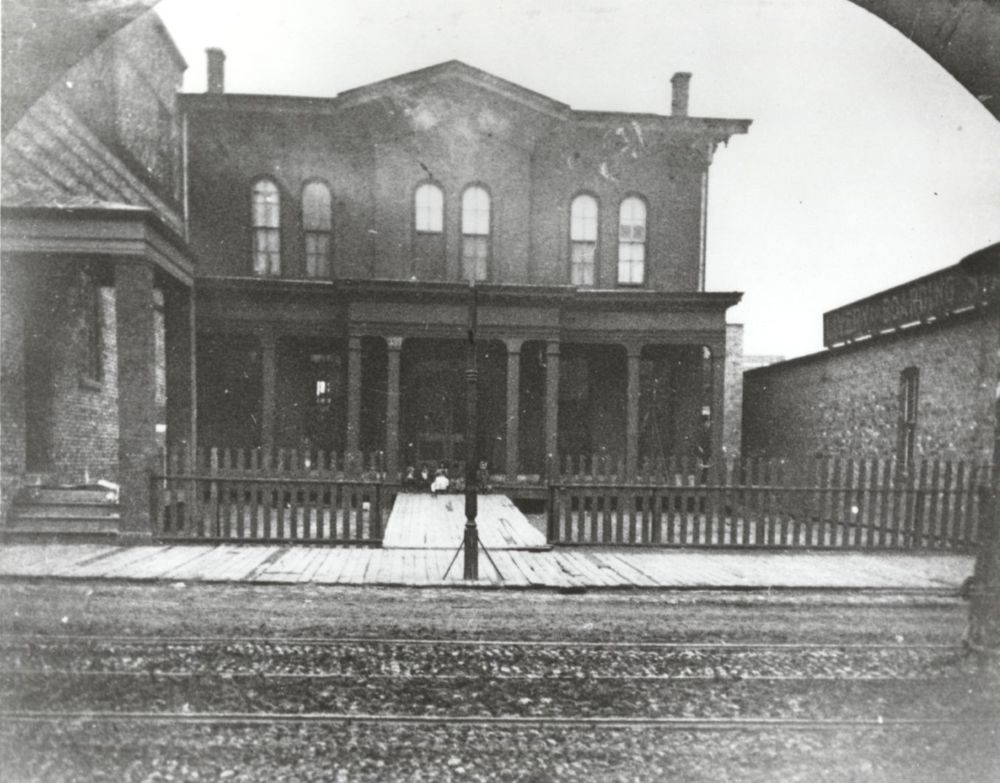
In 1889, Jane Addams, Ellen Gates Starr, and Mary Keyser first moved into the Hull residence, the first building of what would become a 13-building settlement. It had already passed between many hands by that time. The Hull residence was built for the family of real estate developer and philanthropist Charles J. Hull. He lived there until 1868, moving further into the city after the deaths of his wife and son.1 It passed into the care of Hull’s cousin, Helen Culver, who rented it for different uses. The house survived the Great Chicago Fire of 1871 due to its location on the outskirts of the city. It served many purposes over the years: the office of a furniture factory, a care home run by the Little Sisters of the Poor, and residential apartments, before Addams, Starr, and Keyser founded the settlement.
When they moved in, Hull-House’s founders had upstairs neighbors on the second floor. As neighbors do, they came with their own traditions and beliefs about the home. One of these fascinated Addams so much that she would write about it over two decades later in her book Twenty Years at Hull-House:
“[The house] had a half-skeptical reputation for a haunted attic, so far respected by the tenants living on the second floor that they always kept a large pitcher full of water on the attic stairs. Their explanation of this custom was so incoherent that I was sure it was a survival of the belief that a ghost could not cross running water, but perhaps that interpretation was only my eagerness for finding folklore.”2
The Devil Baby of Hull-House
On Halloween in 1913, the Chicago Examiner reported that stories of a “devil child” were being circulated in what was then Chicago’s 19th Ward, and that “thousands of the people believed it.”3 This devil child was reportedly being kept at Hull-House, and people were flocking to the settlement in droves in hopes of seeing it. A few years later, Addams wrote an article for The Atlantic about the furor. She wrote that Hull-House became aware of the Devil Baby legend when a trio of Italian women from the neighborhood arrived at the settlement in a frenzy, demanding to see the child.
“… No amount of denial convinced them that he was not there, for they knew exactly what he was like, with his cloven hoofs, his pointed ears and diminutive tail; moreover, the Devil Baby had been able to speak as soon as he was born and was most shockingly profane.” 4
The local Italian community seems to have originated the most widely shared version of the story. Addams notes that other ethnic groups had their own versions. According to the “Italian” version of the tale, a young Catholic woman in the neighborhood had married an atheist man. One day, he came home from work to find that she had hung religious imagery in the house. He pulled the images from the wall and proclaimed that he’d rather have a devil in his house than display these decorations. Not long after, when the woman gave birth, their child came in the form of a devil. Bewildered, the family brought the child to the Hull-House settlement in hopes of finding aid. The Hull-House residents did not know what to do with the child, either, and on the off-chance that it would fix things, attempted to have him baptized. However, he escaped and had to be caught once more, after which he was kept in the attic of the Hull residence. Other versions of the story include the Jewish iteration, in which the father of several girls proclaims that he would rather have a devil for a child than another girl.5
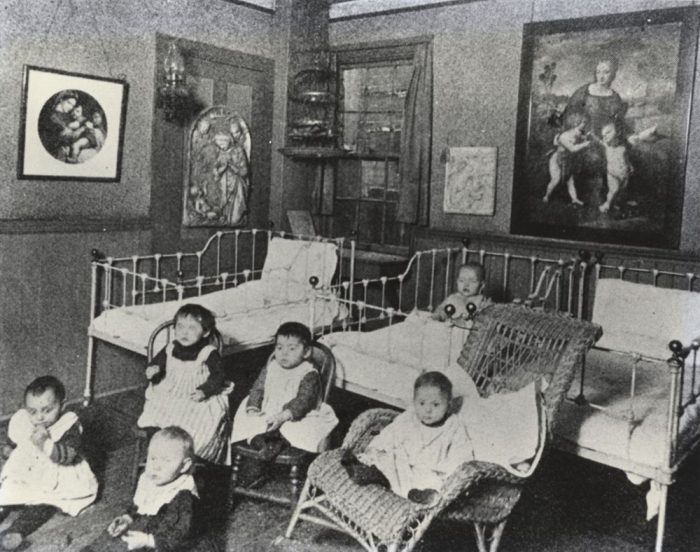
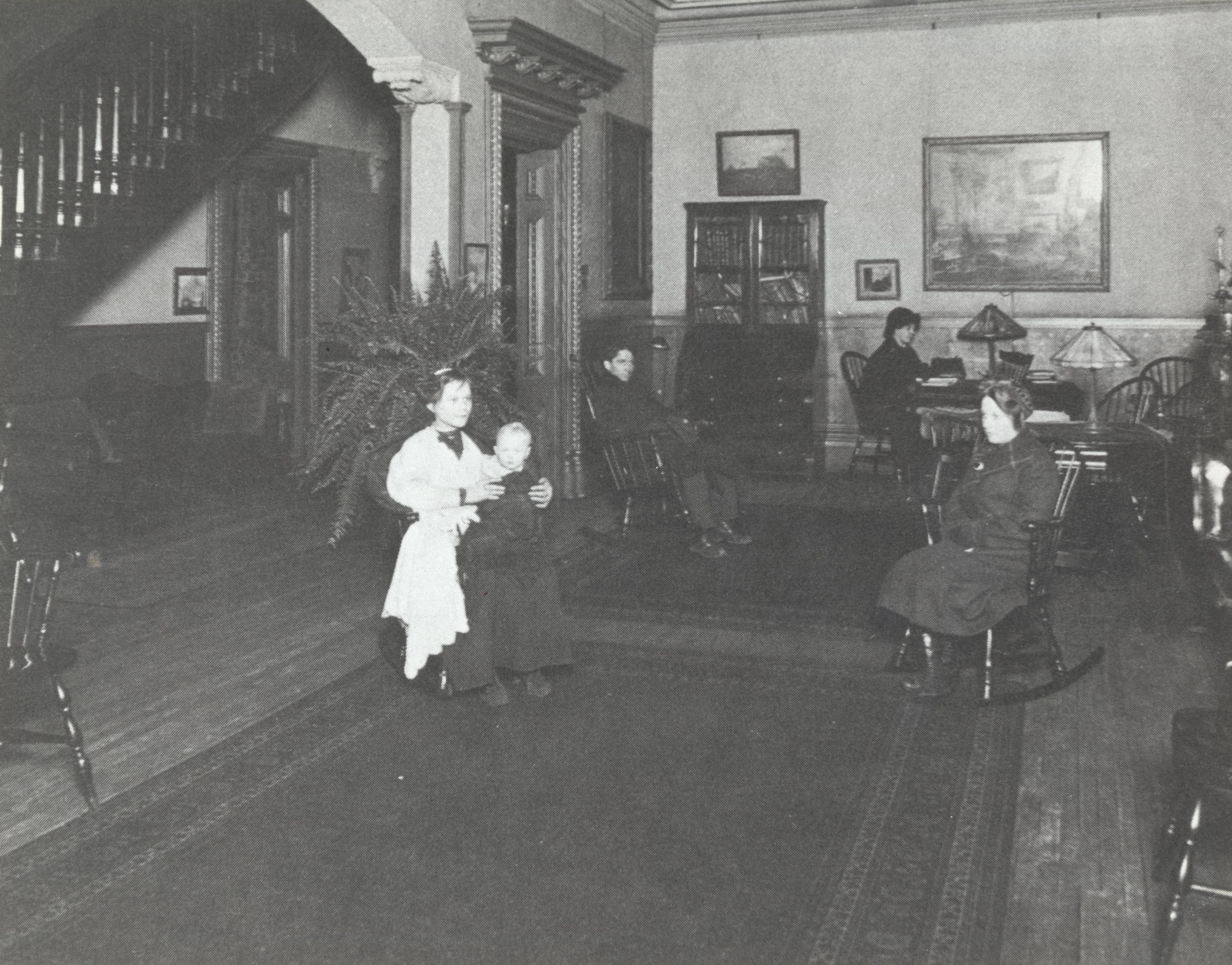
Addams wrote extensively about how and why the story of the Devil Baby reflected the fears and trauma of Hull-House’s immigrant neighborhood.6 Addams believed that the Devil Baby story provided local women with an opportunity to give voice to the depth of their struggles. Chicago women in the 1910s found themselves contending with many of the same anxieties around raising children as we do today, but were also dealing with hardships like high child mortality rates, a lack of medical care for expectant mothers, the perceived dangers that urban life posed for young people, and social structures that placed the bulk of moral obligations and expectations on mothers with regard to their children’s (and spouse’s) conditions.
The story can be seen as vindicating, serving as a condemnation from abused and mistreated women of their husbands’ wrongdoings, and a warning that these men’s actions could have disastrous consequences for their families. Addams also argues that the importance of elder matriarchs had begun to dwindle as generations passed, as did their influence as keepers of memories, knowledge, and wisdom. It may have been that the story created a space for older women to reestablish, to some extent, their matriarchal influence by communicating a “real” example of a moral tale.7
According to Addams, the flurry of interest in the Devil Baby at Hull-House lasted an intense six weeks. Gradually, neighbors lost interest and no longer lined up outside of Hull-House or tried to pay residents to let them see the child. However, according to the legend, the spirit of the Devil Baby remains in the attic at the Hull residence and can sometimes be seen peering out of upstairs windows at the street below.
The Lady in White
The Devil Baby is not the only reported supernatural denizen of Hull-House. The most renowned specter is the Lady in White. One of the world’s most recognizable reported apparitions, the “Lady in White” is said to be the spirit of a woman who died tragically and unfulfilled. These figures take on a myriad of different identities, depending on when and where the story is being told. They include the many variances on the ghost bride tale, where a young woman dies on her wedding day and haunts the place of her demise in her wedding gown. Others are more specific and well-known: La Llorona is a notable Latin American example who weeps as she haunts bodies of water, while Chicago has its own Resurrection Mary, who is said to be a vanishing hitchhiker haunting Archer Avenue.
Hull-House’s Lady in White is said to be none other than Melicent (or Millicent) Hull, the wife of Charles J. Hull, who died in the house in 1860, possibly of tuberculosis. Reported sightings have occurred in many parts of the home, including Addams’s bedroom and office, the museum’s gallery spaces, and the staircases. A harmless figure, she is often reported as simply standing and watching those who see her.
According to Addams, rumors of a ghost’s presence were reported by the same tenants who placed the water pitcher on the attic stairs. Our historical accounts of the Hull-House Lady in White specifically come from Hull-House benefactor, treasurer, and board member Louise de Koven Bowen. In her memoir Open Windows (1946), Bowen reported that many who stayed in a particular guest room on the second floor of the Hull residence had difficult nights: “…in the morning the guests always looked unhappy and asked to have their room changed.”8
Jane Addams never related the story in her own writings, but according to Bowen, Addams decided to see for herself what the trouble was with the room. She and Mary Rozet Smith, her life partner and a vital Hull-House supporter and benefactor, resolved to spend the night there. In the middle of the night, they woke up to the feeling of someone being present in the room with them. They found themselves staring at a woman in a white dress at the foot of their bed. When Addams asked who she was, the mystery woman did not respond. Instead, she turned away and “…glided from the room, seeming to vanish through the locked door”.9
Why folklore?
Folklore has served to communicate and transmit lessons within families and communities for centuries. Folktales help us to process tragedies and unexplainable events. They enable us to craft elaborate warnings about dangerous experiences and places. They encourage caution around the unknown and guide children to follow the advice of their elders. The ghost stories that originated at Hull-House are an important form of communicating the complexity, danger, and fleetingness of life, as expressed from one generation to another.
Over the last century, following mass migration to American cities, folklore has taken on a new form – the urban legend. This specific sort of folktale centers urban places and seeks to sow caution regarding the new dangers and experiences one might find. Chicago is the site of many urban legends, and Hull-House’s folkloric history is an important chapter in that wider collection of stories. At the Jane Addams Hull-House Museum, we believe that this history is an effective way of understanding the experiences of the 19th Ward, and the emotional and sociological landscape of Hull-House’s early days.